Availability varies — please call or email to confirm.
syn: Dwarf/Miniature Heavenly Bamboo
Nandina domestica Pygmaea
$8.00
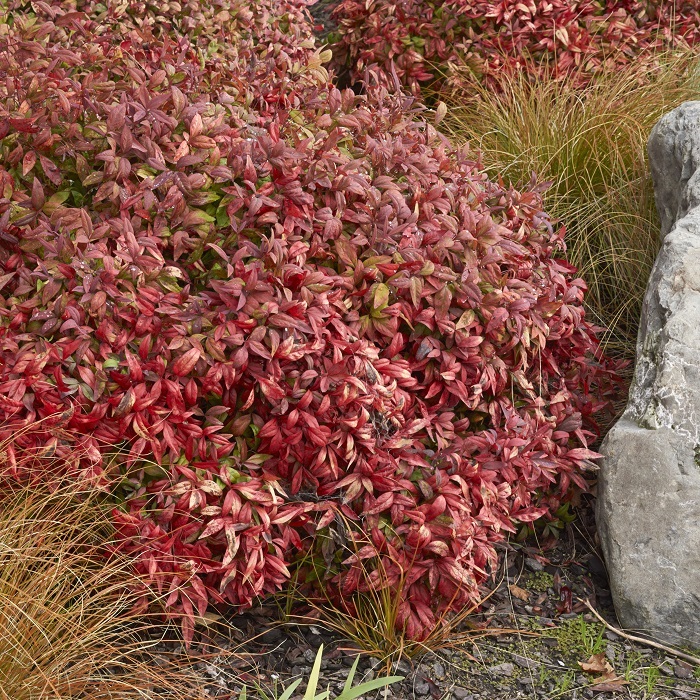
Nandina domestica pygmaea, also known as Dwarf Heavenly Bamboo, is a compact, evergreen shrub with attractive, multi-colored foliage. It features lime-green leaves in spring that transform into shades of purple, crimson, orange, and scarlet throughout the year, particularly in full sun. It’s hardy, low-maintenance, and suitable for a variety of garden settings.
Nandina domestica ‘Pygmaea’, also known as “dwarf sacred bamboo,” is relatively easy to cultivate. It thrives in full sun to partial shade, prefers well-drained, moist soil, and is fairly adaptable to different climates and soils.
Here’s a more detailed guide:
1. Planting:
Location: Choose a spot with well-draining soil that is sheltered from strong winds.
Soil: Amend the soil with compost or well-rotted manure to improve fertility and drainage.
Planting Time: Nandina is best planted in spring or autumn.
Planting Hole: Dig a hole twice as wide and the same depth as the root ball.
Watering: Water thoroughly after planting and maintain moist soil for several weeks while the plant establishes.
2. Watering and Fertilizing:
Watering:
Water deeply and regularly, especially during dry periods, but allow the soil to dry out slightly between waterings.
Fertilizing:
Apply a slow-release fertilizer in early spring to support healthy growth and vibrant foliage.
Mulching:
Mulch around the base of the plant to help retain moisture and suppress weeds.
3. Pruning and Maintenance:
Pruning:
Light pruning can be done throughout the year to maintain its compact form.
Leaf Drop:
Nandina may drop some leaves in winter, especially if exposed to extended cold, but this is normal as the plant prepares for new growth.
Pest and Disease:
Nandina is generally resistant to pests and diseases, but it’s always good to monitor for any problem