Availability varies — please call or email to confirm.
Hydrangea macrophylla Magical Pearl
$10.00
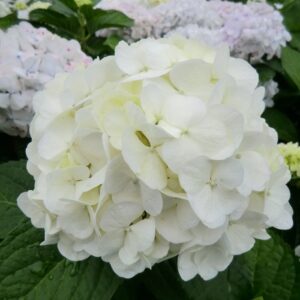
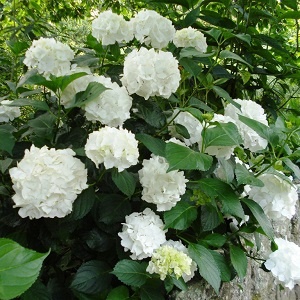
Hydrangea macrophylla ‘Magical Pearl’ is a compact deciduous shrub known for its elegant, long-lasting blooms. It produces large, rounded clusters of creamy white flowers that can blush pink or green as they mature, providing a soft, romantic display in garden beds, borders, or containers. Its compact size, making it ideal for small gardens or containers, and its ability to thrive in partial shade are additional benefits.
Magical Pearl is a stunning clear white flower held on strong stems over deep green foliage. After a few weeks from the peak of flowering, the white ages to a chartreuse green that looks great in bouquets or as dried flowers. Flowers are formed on both old and new wood, so pruning shouldn’t be done unless necessary.
Hydrangea ‘Magical Pearl’ thrives in partial shade with moist, well-drained soil, and can be grown in pots or garden beds. It prefers slightly acidic soil and benefits from organic matter additions. Regular watering, especially during dry periods, is essential.
Cultivation Details:
Light:
Partial shade is ideal, but it can tolerate morning sun and afternoon shade, especially if the soil is consistently moist.
Soil:
Well-drained, rich, slightly acidic soil is preferred. Improving chalky soils with organic matter can enhance growth.
Watering:
Maintain consistently moist soil, but avoid overwatering, which can lead to root rot.
Climate:
Best suited for temperate and cool regions, but can be grown in warmer climates with adequate watering and shade.
Fertilizing:
Apply a balanced, slow-release fertilizer in early spring to encourage healthy growth and flowering.
Mulching:
Mulch can help conserve soil moisture and regulate soil temperature, especially during the summer months.
Pruning:
Lightly prune after flowering to maintain the plant’s shape and encourage new growth.
Pests and Diseases:
May be susceptible to aphids, capsid bugs, hydrangea scale, vine weevil, leaf spot, grey moulds, powdery mildews, and honey fungus.
Container Growing:
Hydrangea ‘Magical Pearl’ can be grown in pots, which provides greater control over light, soil, and water conditions.
Companion Plants:
Can be paired with ferns, hostas, and Japanese maples to create a lush, shaded garden effect.