


Key Characteristics:
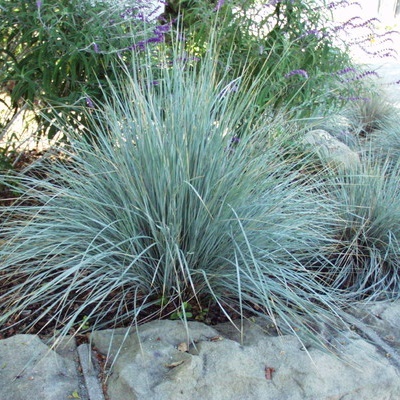
- Foliage: The most distinctive feature is its evergreen, blue-grey foliage, which provides year-round interest.
- Flower Spikes: Tall, slender flower spikes emerge in summer, bearing small, oat-like flowers that turn a straw color as they mature.
- Growth Habit: It forms dense, rounded clumps, adding a touch of elegance to any landscape.
- Size: Typically grows to a height of 2-3 feet and a similar width.
- Origin: Native to Europe, it is well-suited to a variety of climates.
Ideal Growing Conditions:
- Sunlight: Thrives in full sun but can tolerate light shade.
- Soil: Prefers well-drained soil, but can tolerate a range of soil types as long as they are not waterlogged.
- Water: Requires moderate moisture, but is drought-tolerant once established.
- Hardiness: Very hardy and can tolerate cold winters, though foliage may die back in some regions.
Uses in the Garden:
- Specimen Plant: Its striking foliage makes it a great focal point in garden beds and borders.
- Mass Planting: Can be used to create ground cover or dramatic sweeps of blue.
- Rock Gardens: Its drought tolerance makes it a good choice for rock gardens.
- Borders: Provides a beautiful edge to garden beds and pathways.
- Companion Planting: Complements other blue-toned plants, as well as pink-flowering perennials and spring bulbs.
Care and Maintenance:
- Pruning: Remove dead or damaged foliage in late winter or early spring.
- Division: Clumps can be divided in spring or fall to rejuvenate the plant.
- Pest and Disease: Generally pest and disease resistant, but can be susceptible to crown rot in poorly drained soils.
Last Updated on September 23, 2025 by admin