


-
Appearance:
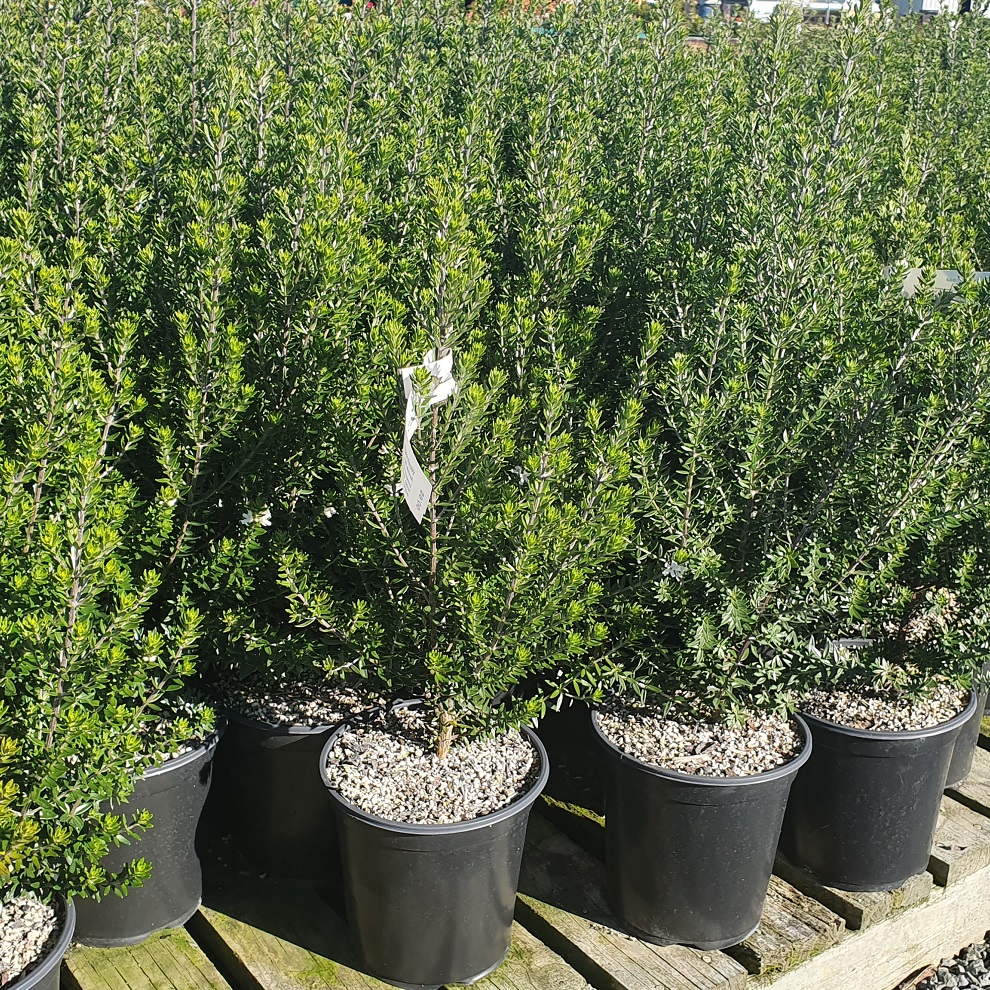
Westringia fruticosa is a dense, bushy shrub with a rounded habit. Its leaves are narrow, often with a silvery underside, giving the plant a greyish appearance. The small, white or pale mauve flowers appear in clusters along the stems, particularly during spring and summer.
-
Size:
It typically grows to a height of 1-1.5 meters (3-5 feet) and a similar width, though some varieties can be more compact.
-
Hardiness:
This shrub is exceptionally hardy, tolerating drought, coastal conditions (including salt spray), and a range of soil types. It can also handle some frost.
-
Light and Soil:
Westringia fruticosa prefers full sun but can tolerate partial shade. It thrives in well-drained soil and is relatively low-maintenance.
-
Uses:
- Hedging and Screening: Its dense growth habit makes it ideal for creating low hedges or screens.
- Specimen Plant: It can be used as a standalone shrub to add structure and interest to a garden.
- Coastal Gardens: Its tolerance to salt spray and drought makes it a perfect choice for coastal landscapes.
- Groundcover: Some varieties, like ‘Mundi’, are low-growing and spreading, making them suitable for groundcover.
- Cut Flowers: The upright growth habit and long-lasting flowers make it suitable for cut flower arrangements.
- Hedging and Screening: Its dense growth habit makes it ideal for creating low hedges or screens.
-
Maintenance:
Westringia fruticosa generally requires minimal pruning to maintain its shape and density, according to the Australian Plants Society. Regular pruning can encourage a more compact, formal hedge shape.
- ‘Wynyabbie Gem’: Known for its fast growth and abundant pale lavender-mauve flowers.
- ‘Mundi’: A low-growing, spreading variety with masses of white flowers, ideal for groundcover.
- ‘Blue Gem’: Features profuse bluish-purple flowers.
- ‘Smokey’: A variety with colourful foliage.
Last Updated on February 14, 2026 by admin