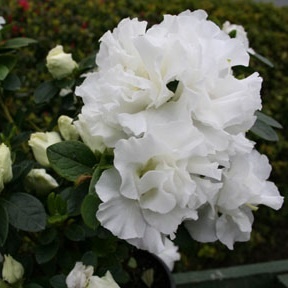
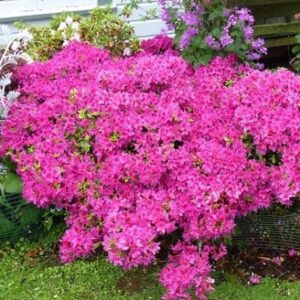
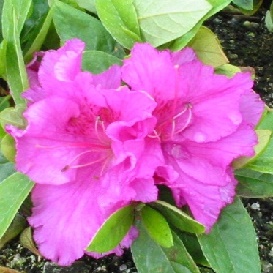
Azalea ‘Pax’ is a popular evergreen azalea known for its compact size, masses of pure white double flowers, and relatively low maintenance. It typically grows to 60-80cm tall and wide and thrives in moist, well-drained, slightly acidic soil, often in partial shade.
Flower: The ‘Pax’ azalea is prized for its profuse blooms, which are pure white, double-frilled flowers often highlighted with green freckles at the throat.
Foliage: It has fresh green, evergreen foliage, which adds to its appeal throughout the year.
Size: It’s a dwarf, compact variety, making it ideal for smaller gardens or containers.
Growth Habit: It’s a hardy shrub with a compact, tidy habit, often used in low hedges or as a specimen plant.
Hardiness: ‘Pax’ is generally frost hardy and can tolerate various climates.
Soil: It prefers moist, well-drained, slightly acidic soil.
Sunlight: While it can tolerate full sun in some cases, it generally prefers part shade or semi-shade.
Uses: Azalea ‘Pax’ is a versatile shrub that can be used in various garden settings, including borders, containers, and under plantings of larger trees.
Care: It requires minimal pruning and benefits from mulching to retain moisture.
Pest and Disease: Azaleas are generally relatively pest-free but can be susceptible to aphids, thrips, and mites, which can be treated with a suitable insecticide.
General Notes: Azaleas are evergreen, but they do shed their leaves seasonally, with new leaves emerging in spring and the old ones falling in autumn.
Azalea ‘Pax’ thrives in a slightly acidic, well-drained soil, benefiting from partial shade. It prefers moist conditions, but avoids “wet feet” and benefits from regular mulching to retain moisture. Mulching helps preserve soil moisture and provides a layer of organic matter for the shrub’s shallow, fibrous roots.
Here’s a more detailed breakdown of cultivation:
Soil and Location:
Acidic Soil: Azaleas, including ‘Pax’, thrive in slightly acidic soil (pH 5.0-6.0).
Well-Drained: Poorly drained soil can lead to root rot, so ensure good drainage.
Partial Shade: While they can tolerate full sun, partial shade (especially in hotter climates) is preferred, especially during the hottest part of the day.
Planting:
Planting Time: Best planted from March to September.
Hole Size: Dig a hole twice as wide and to the same depth as the root ball.
Soil Enrichment: Enrich the soil with organic matter like Yates Dynamic Lifter Organic Plant Food.
Backfilling: Gently backfill the hole and firm down the soil, forming a raised ring around the plant to channel water.
Watering: Water thoroughly after planting.
Mulching:
Organic Mulch:
Use organic mulch like bark chips or pea straw to retain moisture and provide nutrients.
Keep it Away from Stem:
Ensure the mulch is kept away from the main stem to prevent fungal problems.
Watering:
Consistent Moisture: Maintain consistent moisture, especially during dry periods.
Avoid Overwatering: Ensure the soil is well-drained to prevent “wet feet”.
Fertilizing:
Regular Feeding: Feed regularly with a fertilizer formulated for acid-loving plants, like Yates Thrive Camellia, Gardenia & Blueberry Granular Plant Food.
Avoid Lime: Avoid using lime, as it can stunt or kill azaleas.
Foliar Feeding: Foliar feeding with a liquid fertilizer during spring, summer, and autumn can provide an extra boost.
Other Considerations:
Pruning:
Azaleas generally require minimal pruning, but you can prune after flowering to maintain shape.
Propagation:
Azaleas can be propagated from seed, but cuttings are preferred for cultivars like ‘Pax’.
Pests and Diseases:
Check for any unusual issues and consult with a gardening expert if needed.