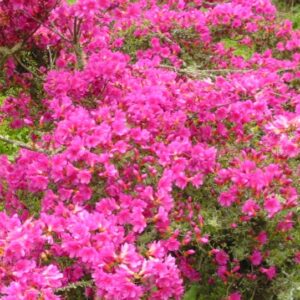
Azalea ‘Wards Ruby’ is an evergreen shrub known for its abundant, ruby-red blooms that grace the landscape in late winter and early spring. It features glossy, dark green leaves that sometimes display a reddish-purple tinge in the winter months.
It’s a small, evergreen shrub with ruby-red blooms, best grown in semi-shade or full sun with well-drained, acidic soil. It’s particularly vibrant in a sheltered location and benefits from minimal pruning and regular mulching.
Here’s a more detailed look at cultivating Azalea “Wards Ruby”:
1. Planting Location:
Sunlight:
While it can tolerate full sun, it prefers semi-shade, especially during hotter periods. A location with some shade in the afternoon would be ideal.
Soil:
It requires well-drained, acidic soil, and can be grown in a wider variety of soil types than some other azaleas, as long as it’s well-draining.
Shelter:
A sheltered location is beneficial, as it can protect the plant from drying winds.
2. Soil Preparation and Planting:
Improve drainage:
If the soil is clayey or has poor drainage, amend it with organic matter or grit to improve drainage.
Acidic soil:
Azaleas prefer acidic soil, so you may need to test your soil pH and add sulfur or acid compost if necessary.
Planting depth:
Plant at the same depth as the container it came in.
Mulch:
Apply a layer of mulch around the base of the plant to help retain moisture and regulate soil temperature, especially in a location with intense summer sun.
3. Watering:
Moist, but not soggy: Azaleas have shallow root systems and are sensitive to both drought and overwatering.
Regular watering: Keep the soil consistently moist, especially during dry periods.
Water in the morning: Water in the morning to allow the plant to absorb moisture before the heat of the day.
4. Fertilizing:
Azalea fertilizer: Use a fertilizer specifically formulated for azaleas in early spring.
Avoid lime: Lime will raise the soil pH, which can harm azaleas.
5. Pruning:
Minimal pruning:
Azaleas generally do not require much pruning, but it’s best to prune in early spring.
Shape and size control:
Prune to maintain the desired shape and size, and to remove any dead or damaged branches.
6. Pest and Disease Control:
Inspect regularly: Regularly inspect the plant for any signs of pests or diseases.
Treat promptly: If pests or diseases are detected, treat them promptly with appropriate measures.