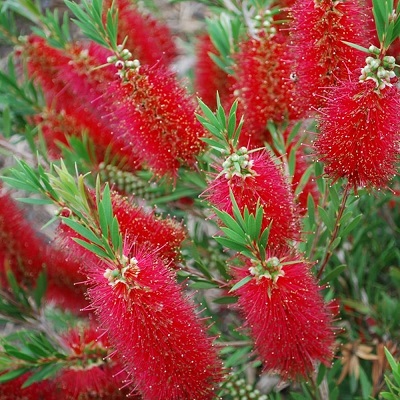
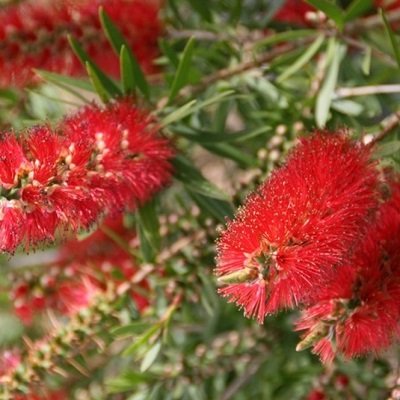
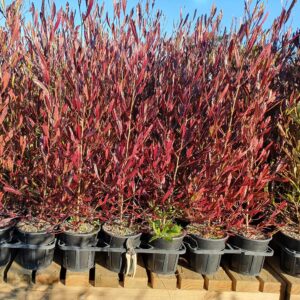
Callistemon ‘Red Clusters’, also known as Bottlebrush, is a vigorous, evergreen shrub known for its attractive, crimson-red, bottlebrush-like flowers and silvery-pink new foliage that matures to mid-green. These flowers appear in masses, particularly in spring and autumn, and are a great source of nectar for birds and bees. It’s a hardy plant, tolerant of poor, dry soils and some coastal conditions once established, though it prefers some moisture and dislikes wet, poorly drained soils. It can be pruned for shaping and hedging and is commonly used for screening, hedging, or as a specimen plant in mixed plantings.
Callistemon ‘Red Cluster’, commonly known as Bottlebrush, is a vibrant evergreen shrub that thrives in full sun and well-drained soil. It’s known for its masses of crimson-red bottlebrush flowers, especially prominent in spring and autumn. ‘Red Cluster’ is relatively low-maintenance, tolerates various conditions, and is ideal for hedging, screening, or as a feature plant.
Cultivation Details:
Sunlight:
‘Red Cluster’ needs full sun to produce its vibrant flowers.
Soil:
Well-drained soil is essential. In heavier clay soils, planting on a raised mound can improve drainage.
Watering:
Regular watering is crucial in the first year to establish a strong root system. Once established, it’s drought-tolerant and only needs occasional watering during dry periods.
Fertilizing:
A low-phosphorus, slow-release fertilizer formulated for Australian natives is recommended in early spring. For container-grown plants, a liquid fertilizer can be used monthly.
Mulching:
Mulch helps retain moisture and suppress weeds, but keep it away from the main stem to prevent rot.
Pruning:
Pruning after flowering helps maintain a dense, bushy shape and encourages more abundant blooms in the following season.
Hardiness:
‘Red Cluster’ is relatively hardy and tolerates moderate frost and coastal conditions.
Pests and Diseases:
May be susceptible to scale insect, mealy bug, and glasshouse red spider mite, as well as honey fungus.
Specific Considerations for Pirongia:
Pirongia’s climate and soil conditions are generally suitable for Callistemon ‘Red Cluster’, given its tolerance for various conditions.
Ensure good drainage, especially if planting in clay soil, by using raised mounds if necessary.
Monitor for pests and diseases, and address them promptly if they arise.
Consider the mature size of the plant (3-4 meters tall) when choosing a planting location.