


-
Appearance:
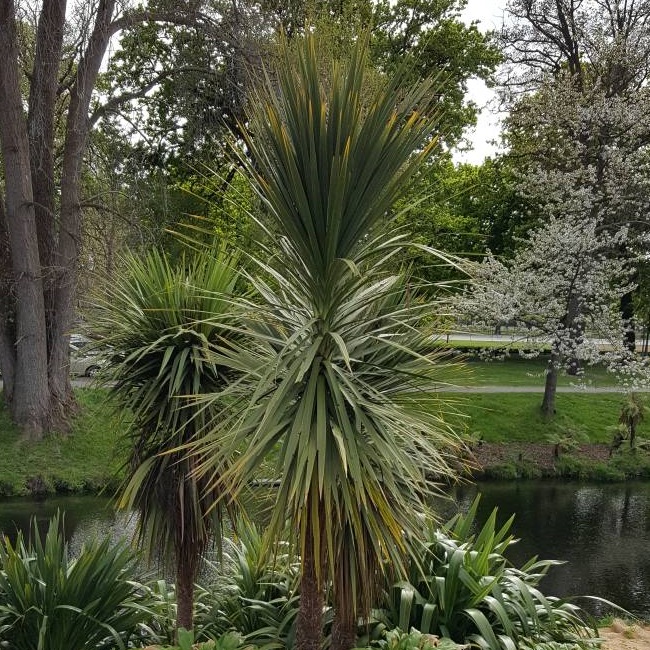
Cordyline australis has a single trunk that can become quite stout as the tree ages, developing a unique sculptural form. The leaves are long, narrow, and sword-shaped, typically clustered at the top of the trunk. They can be up to a meter long.
-
Habitat and Growth:
This species is found throughout New Zealand, from coastal areas to inland forests and even urban gardens. It thrives in well-drained soil and full sun but can also tolerate wetter conditions. The tree is a light-demanding pioneer species, meaning it needs open space to grow and seedlings are vulnerable to being shaded out by other vegetation.
-
Flowers and Fruit:
In early summer, the cabbage tree produces sweetly scented creamy white flowers in large panicles. These flowers attract pollinators like bees and eventually develop into bluish-white berries that are attractive to birds.
-
Bark and Trunk:
The bark of the cabbage tree is thick, corky, and persistent, ranging in color from pale to dark grey. As the tree ages, the trunk becomes more robust and branched, particularly after the first flowering.
-
Cultural Significance:
Cordyline australis holds cultural significance for Māori, who used various parts of the tree for food, fibre, and medicine. The growing tips were eaten as a vegetable, and the leaves were used to create a tough fiber for weaving.
-
Variations:
While the most common variety is green-leaved, there are also cultivars with reddish-bronze or variegated leaves. Some dwarf varieties, like ‘Karo Kiri’, are also available.
-
Hardiness:Cordyline australis is generally hardy and can tolerate a wide range of conditions, but young plants may need protection from livestock and browsing pests.
Last Updated on September 23, 2025 by admin