


-
Appearance:
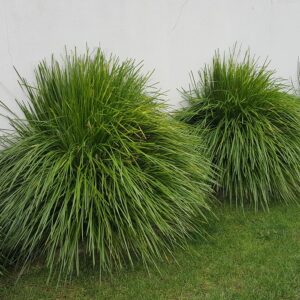
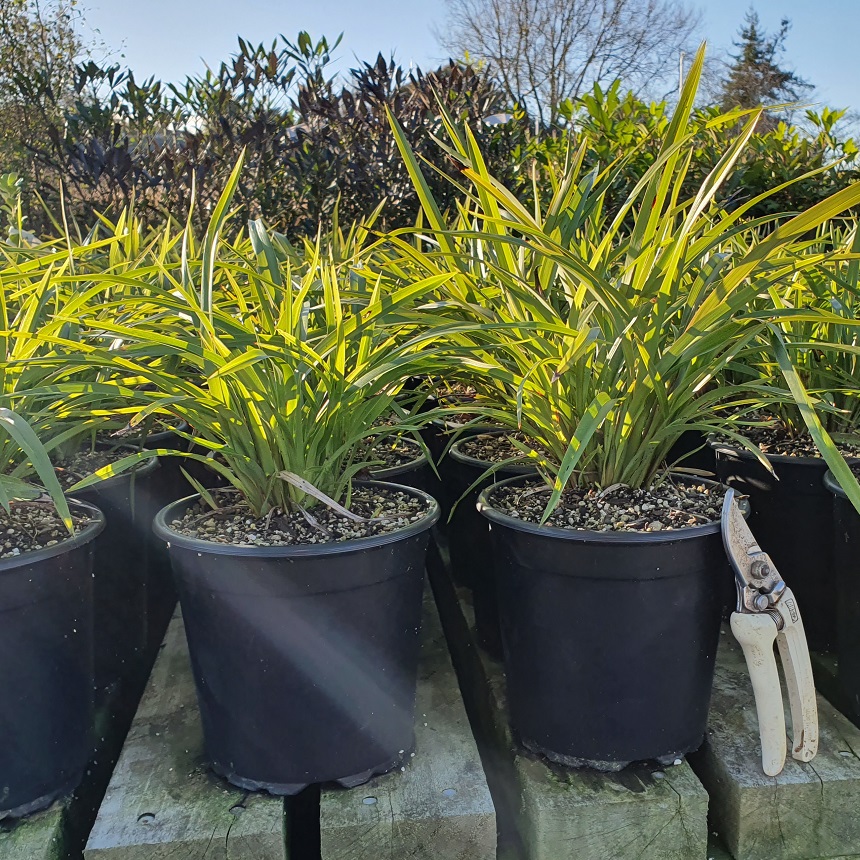
Dianella intermedia is an herbaceous perennial, meaning it has non-woody stems that die back in winter but regrow from the base. It’s often described as having a grass-like or flax-like appearance due to its long, narrow, and strap-like leaves.
-
Foliage:
The leaves are typically mid-green and form clumps or tufts. Some cultivars, like ‘Margaret Pringle’, may have variegated leaves with white margins.
-
Flowers:
In summer, it produces spikes of small, delicate, pale violet or violet-blue flowers.
-
Berries:
Following the flowers, it produces bright blue or deep purple berries, which are quite showy and attractive. These berries are borne on 40-50cm stems.
-
Size:
It generally grows to about 50cm in height and width, but some varieties like ‘Little Rev’ might be smaller, around 30-40cm.
-
Habit:
It forms clumps or colonies, spreading through rhizomes (underground stems).
-
Hardiness:
Dianella intermedia is a hardy plant, tolerant of dry conditions, moderate frost, and coastal environments. It prefers well-drained soil but can adapt to various soil types.
-
Uses:
It’s commonly used in mass plantings for groundcover, in borders, as an accent plant, or planted around features like water features or large trees. It can also be used in cottage gardens or around pool areas.
-
Light:
It thrives in full sun to moderate shade.
-
Native:
It’s native to Lord Howe Island and Norfolk Island, belonging to the Asphodelaceae family.
-
Distinction from other Dianella species:While many Dianella species have edible berries, Dianella intermedia berries are considered toxic and should not be consumed.
Last Updated on September 23, 2025 by admin