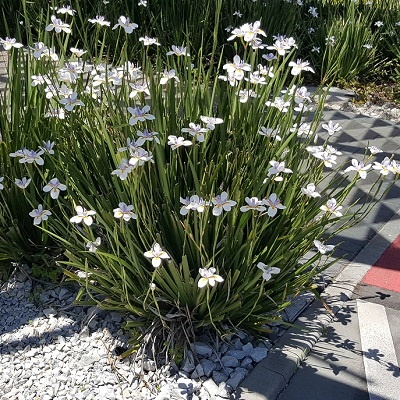
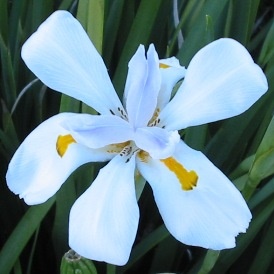
Dietes grandiflora, commonly known as Fairy Iris or Large Wild Iris, is a resilient, evergreen perennial valued for its striking white, iris-like flowers with yellow and violet markings, and its sword-like, clumping foliage. Originating from South Africa, it’s a hardy plant, tolerating drought, coastal conditions, and light frosts once established. It flowers repeatedly throughout spring and summer, making it a popular choice for borders, mass plantings, and erosion control in New Zealand gardens.
Dietes grandiflora, also known as the large wild iris or fortnight lily, is a relatively low-maintenance plant that thrives in full sun to partial shade and well-drained soil. It’s known for its tough, grass-like leaves and delicate white and light purple flowers. It’s a versatile plant, suitable for various garden settings, including coastal areas, and can be planted in garden beds, as a feature plant, or in mass plantings.
Here’s a more detailed look at its cultivation:
1. Sunlight and Location:
Dietes grandiflora prefers full sun to partial shade.
It can tolerate coastal conditions, making it suitable for various locations.
For optimal flowering, plant in full sun or light shade.
2. Soil and Watering:
Well-drained soil is crucial for healthy growth.
Adding organic matter like compost can improve soil fertility and drainage.
Water regularly until established, then only during dry spells.
Avoid overwatering, as this can lead to root rot.
3. Planting and Spacing:
Plant in spring or autumn.
Space plants 40-60cm apart for a full, lush appearance.
The plant crown should be at soil level.
Consider planting in a pot at least 300mm wide and deep.
4. Fertilizing:
Feed with a balanced fertilizer in spring to promote flowering.
Consider using a shrub fertilizer in spring.
Throughout the year, you can use a liquid plant food or fish blood and bone fertilizer.
5. Pruning:
Prune spent leaves in autumn and winter.
New leaves will emerge when conditions warm up.
6. Pest and Disease:
Monitor for mealybugs, especially around the roots, and treat with systemic insecticide or soil drench if needed.