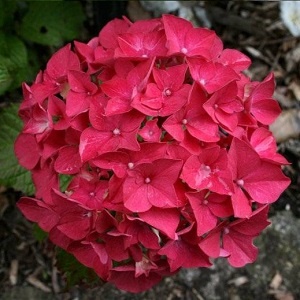
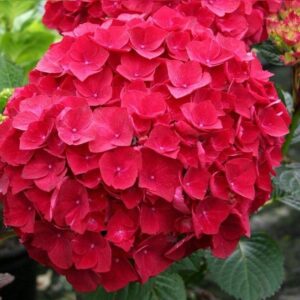
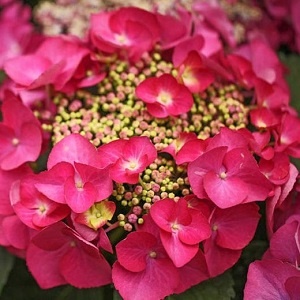
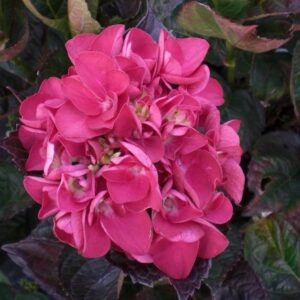
Hydrangea macrophylla ‘Alpengluhen’ is a deciduous shrub known for its vibrant, large mophead flowers, typically blooming from summer through autumn. It features rich pink to crimson blooms set against a backdrop of dark green foliage. The plant reaches approximately 1.2 meters in height and spread.
Hydrangea macrophylla ‘Alpenglühen’ thrives in a slightly acidic, well-drained soil that is enriched with organic matter. It prefers a location with morning sun or partial shade, and needs regular watering, especially during dry periods. Mulching around the base of the plant helps retain moisture and regulate soil temperature.
Detailed Cultivation:
Soil:
Hydrangeas generally prefer a slightly acidic soil, but Alpenglühen can tolerate a range of pH levels. Ensure the soil is well-draining to prevent waterlogging. Amend the soil with organic matter like compost to improve structure and fertility.
Sunlight:
While some varieties can tolerate full sun, Alpenglühen thrives in partial shade, especially during the hottest part of the day. Morning sun is ideal, followed by afternoon shade.
Watering:
Regular watering is crucial, especially during dry spells, but avoid overwatering, as this can lead to root rot. Water when the soil feels dry to the touch.
Fertilizing:
Hydrangeas benefit from regular feeding, particularly in spring and late summer/early autumn. Use a balanced fertilizer or one specifically formulated for hydrangeas.
Mulching:
A layer of mulch around the base of the plant helps to retain moisture, suppress weeds, and regulate soil temperature.
Pruning:
Prune Alpenglühen after flowering or in early spring. Remove any dead or damaged wood and shape the plant as needed.
Pests and Diseases:
Hydrangeas can be susceptible to various pests and diseases, including aphids, capsid bug, red spider mite, and leaf spot. Inspect plants regularly for any signs of problems and take appropriate action if necessary.
Propagation:
Alpenglühen can be propagated by softwood cuttings in early summer or hardwood cuttings in winter.
Wind Protection:
Provide some protection from strong winds, as these can damage branches and affect flowering.