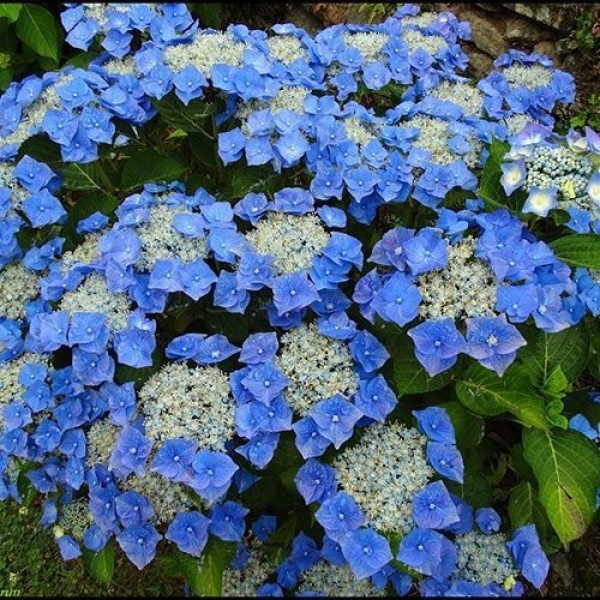
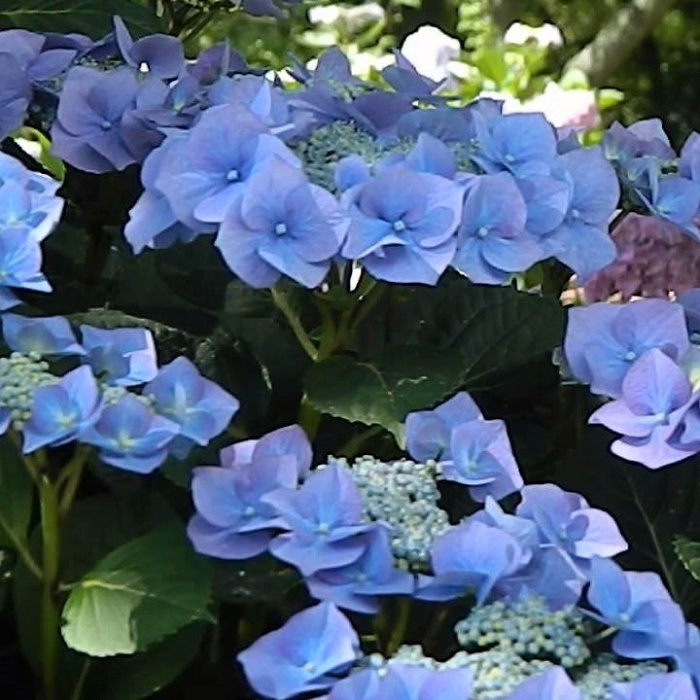
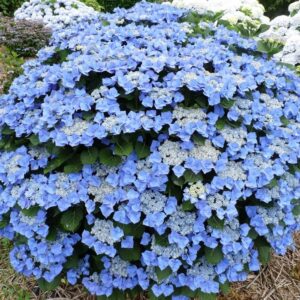
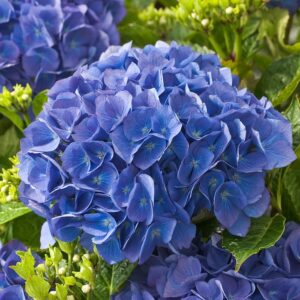
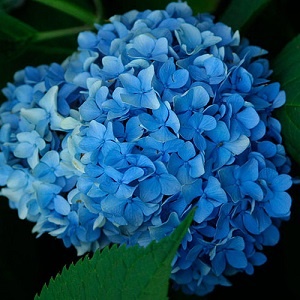
Hydrangea macrophylla ‘Blaumeise’ is a lacecap hydrangea known for its large, flat flower heads with vibrant blue central florets and soft blue sterile flowers surrounding them. These flowers bloom from early to late summer and contrast beautifully with the lush, dark green foliage. This deciduous shrub thrives in part-shade with moist, well-drained, acidic soil and is a popular choice for shaded borders or woodland-style gardens.
Flower Shape: ‘Blaumeise’ is a lacecap hydrangea, meaning its flower heads are flat, with a central cluster of smaller, fertile flowers surrounded by a ring of larger, sterile flowers.
Flower Color: The central fertile flowers are a deep cobalt blue, and the sterile outer florets are a softer, more delicate blue. In alkaline soil, the flower color can shift to pink.
Foliage: The plant has coarsely toothed, glossy dark green leaves, adding to the visual appeal of the flowers.
Growth Habits: ‘Blaumeise’ is a vigorous shrub, typically growing up to 7 feet tall and 5 feet wide. It has a round, bushy habit.
Growing Conditions: It prefers part-shade and moist, well-drained, acidic soil.
Other Notable Features: ‘Blaumeise’ is a recipient of the Award of Garden Merit from the Royal Horticultural Society. It is also a good plant for cutting and using in dried flower arrangements.
Choose a semi-shaded location with protection from the midday sun, and ensure well-drained, rich soil with consistent moisture. Blue flowers are promoted by acidic soil, which can be achieved through the use of amendments like aluminium sulphate. Regular pruning and mulch application are also important for healthy growth and bloom.
Detailed Cultivation Practices:
Location:
Hydrangeas thrive in semi-shaded areas, offering protection from intense afternoon sun. Morning sun is generally well-tolerated, but afternoon shade helps prevent scorching and fading.
Soil:
Hydrangeas need well-drained soil that is rich in organic matter. Amending the soil with compost, sheep pellets, and a rose/shrub mix can improve fertility.
Moisture:
Consistent watering is essential, especially during dry periods, to prevent wilting and maintain moisture in the soil. Overwatering can lead to root rot, so ensure good drainage.
Soil pH:
For blue flowers, ‘Blaumeise’ requires acidic soil. You can adjust the soil pH by adding aluminium sulphate. Start applying this in late autumn or early spring to allow time for it to be absorbed into the soil.
Pruning:
Prune Hydrangea ‘Blaumeise’ immediately after flowering by cutting back stems to a pair of healthy buds. This helps promote healthy growth and future blooms.
Mulching:
Applying a layer of mulch (like compost, shredded bark, or leaf mould) around the base of the plant helps retain moisture, regulate soil temperature, and suppress weeds.
Fertilizing:
Applying a shrub fertilizer in spring will provide the plant with the nutrients it needs to thrive.
Pest and Disease Control:
Monitor for pests like aphids and diseases like powdery mildew and treat as needed.
Winter Protection:
In Te Awamutu, Hydrangea ‘Blaumeise’ is generally hardy. However, consider providing some winter protection, like mulching, especially in very harsh winters.
Other Tips:
Hydrangeas are not drought-tolerant, so extra watering may be needed during hot spells. Using rainwater to water can also help maintain the blue colour of the flowers.