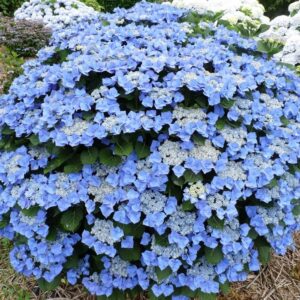
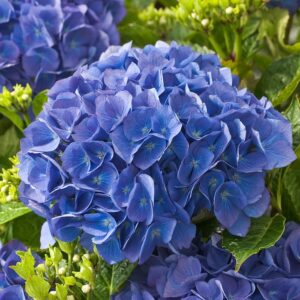
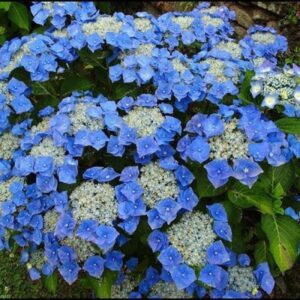
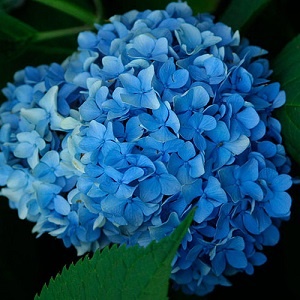
Hydrangea macrophylla ‘Flower Master Blue’ is a popular deciduous shrub known for its vibrant blue mophead flowers, blooming from late spring to early autumn. It thrives in part shade to full sun, preferring moist, well-drained soil and can reach a height and spread of about 1.2 meters. The intensity of the blue color can be influenced by the soil’s acidity, with more acidic conditions deepening the hue.
To successfully cultivate Hydrangea macrophylla Flower Master Blue, focus on providing the right conditions for healthy growth and vibrant blue blooms. Choose a location with full sun or partial shade, ensure well-drained, slightly acidic soil (pH 6 or lower), and provide consistent moisture.
Detailed Cultivation Tips:
1. Site Selection:
Sunlight: Hydrangeas thrive in morning sun and afternoon shade, especially in warmer climates.
Soil: They prefer well-drained, fertile soil rich in organic matter.
Soil pH: Blue flowers are best achieved with a slightly acidic soil (pH 6 or lower).
2. Planting:
Planting time: Spring and autumn are generally recommended for planting.
Planting hole: Dig a hole twice as wide as the root ball and to the same depth.
Root preparation: Gently tease the roots before planting.
3. Watering:
Consistent moisture: Keep the soil consistently moist, especially during the first growing season.
Watering frequency: Water regularly, even weekly, if necessary, to help roots establish.
Rainwater: Using rainwater can help maintain blue flower color, especially if the soil is not naturally acidic.
4. Fertilizing:
Spring fertilization: Use a fertilizer for acid-loving plants in spring to replenish nutrients.
Low phosphorus: A fertilizer low in phosphorus (the middle number in the content analysis) can encourage blue flowers.
Avoid overfeeding: Over-fertilizing can lead to excessive leafy growth at the expense of flowers.
5. Mulching:
Organic mulch: Apply a layer of organic mulch (like leaf mould or compost) around the base of the plant to retain moisture and suppress weeds.
6. Pruning:
Winter pruning: Prune Hydrangeas in late winter or early spring to remove dead or damaged growth and encourage new growth.
7. Maintaining Blue Blooms:
Soil pH: To maintain blue flowers, keep the soil pH below 6.5.
Aluminium sulfate: If the soil pH is higher than desired, you can apply aluminum sulfate every few weeks to help the plant absorb more aluminum and increase the acidity.
Hydrangea colorant: Consider using a hydrangea colorant to improve flower color, especially if the soil pH is close to neutral.