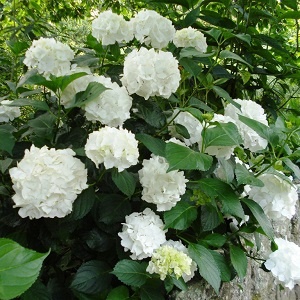
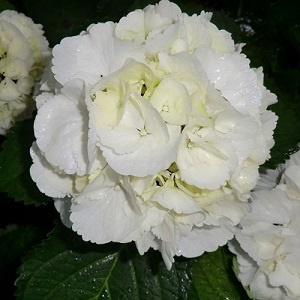
Hydrangea macrophylla ‘Immaculata’ is a compact, deciduous shrub with pure white mophead flowers that bloom in summer. It thrives in partial shade and prefers well-drained, moist soil. Its green foliage and rounded shape make it suitable for various garden settings, including borders and containers. The flowers can develop a pink tinge with age, and the plant is considered hardy and suitable for a range of New Zealand regions.
‘Immaculata’ produces large, dense clusters of pure white flowers, sometimes with a hint of cream as they age. These flowers are the focal point of the plant and offer a long-lasting display.
Foliage:
The plant features glossy, dark green leaves that provide a beautiful backdrop for the flowers. In autumn, the leaves can turn to rich shades of yellow, adding further visual interest.
Growth Habit:
‘Immaculata’ is a compact, mounding shrub, typically reaching a height and spread of 1.2 to 1.5 meters. Its rounded habit makes it ideal for borders, foundation plantings, and as a focal point in mixed beds.
Growing Conditions:
This hydrangea thrives in part shade or full sun, especially if the soil is moist and well-drained. It’s best to avoid placing it in direct midday sun, as the flowers can burn.
Pruning:
‘Immaculata’ can be pruned in late winter or early spring, removing any dead, damaged, or weak stems and shaping the plant as needed. Pruning is best done before new growth begins.
Uses:
This hydrangea is versatile and can be used in a variety of garden styles, including cottage, formal, and woodland gardens. Its elegant flowers and attractive foliage make it a beautiful addition to any garden.
Hardiness:
‘Immaculata’ is hardy and can tolerate cold temperatures, but it’s best to choose a location that provides some protection from harsh winter winds.
In summary, Hydrangea macrophylla ‘Immaculata’ is a beautiful and reliable hydrangea that offers a long-lasting display of pristine white flowers and attractive green foliage, making it a great choice for a variety of garden settings.
Hydrangea macrophylla ‘Immaculata’ requires a well-drained, slightly acidic soil, partial shade to full sun, and consistent moisture. Wind protection and regular watering are also crucial for its development and flowering.
Detailed Cultivation:
Location:
Sunlight: ‘Immaculata’ can tolerate full sun, but partial shade is preferred, especially during midday heat.
Soil: Well-drained, slightly acidic soil is essential. Loam soil, with a good balance of sand, silt, and clay, is ideal.
Wind Protection: Wind protection helps prevent branch breakage and promotes better plant form and more abundant flowering.
Watering:
Regular watering: Keep the soil consistently moist, especially during dry periods.
Avoid waterlogging: Ensure the soil drains well to prevent root rot.
Planting:
Spacing: Space plants about 1 to 1.5 meters apart to allow for their mounding form.
Depth: Plant the root ball at the same depth as it was in the container.
Soil amendment: Incorporate compost or well-rotted manure into the planting hole to improve soil fertility and drainage.
Fertilizing:
Slow-release fertilizer: Apply a slow-release fertilizer in spring to promote healthy growth and abundant blooms.
Avoid over-fertilizing: Excess fertilizer can burn the roots, so follow the instructions on the fertilizer package carefully.
Pruning:
Late winter/early spring: Thin out crowded stems and shorten as needed to encourage new growth and flowering.
Pest and Disease Control:
Monitor for pests: Common pests include spider mites, aphids, and whiteflies. Identify them early and treat as needed.
Disease prevention: Ensure good air circulation and avoid overwatering to prevent fungal diseases.
Container Growing:
‘Immaculata’ can be grown successfully in containers, especially in areas with less space or where wind protection is needed.
Use well-draining potting mix and provide regular watering and fertilization.
Soil pH:
If you want pink blooms, ensure your soil pH is alkaline (higher than 6.5). For blue blooms, you’ll need acidic soil (less than 5.5).