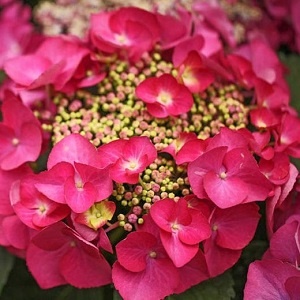
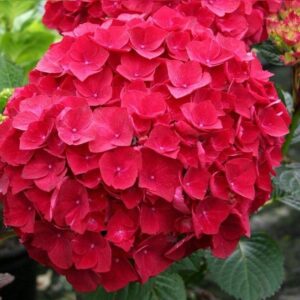
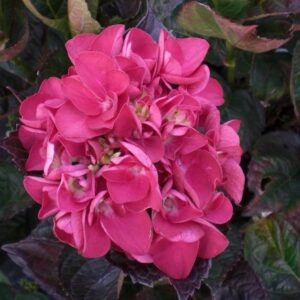
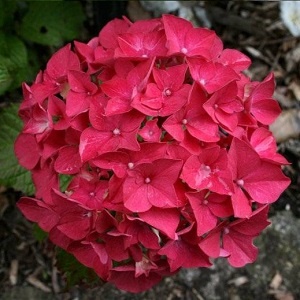
Hydrangea “Red Start,” also known as “Rotschwanz,” is a striking compact hydrangea cultivar with unique lacecap-style flowers. It features spiraled, dark red, sterile florets that are even purer in acid soils, and the true flowers are a two-toned white and red. The plant boasts a strong, healthy appearance with lush foliage that turns a vibrant color in the autumn.
Red Start is a lacecap hydrangea, meaning its flowers are clustered in flattened heads rather than the full, mophead blooms of some other hydrangeas.
Flower Color:
The “Red Start” cultivar exhibits unique color variations. In acidic soil, the sterile florets turn a deep purple. The true, fertile flowers are typically white with red markings.
Foliage:
The plant has lush, glossy green foliage that adds to its appeal. In autumn, the foliage often displays a beautiful red or purple color.
Plant Size:
It’s a compact variety, making it suitable for containers, smaller borders, or feature plantings.
Bloom Time:
Hydrangeas, including “Red Start,” typically bloom in the summer and continue to flower until the first frosts.
Growing Conditions:
Hydrangeas generally prefer part-shade to shade, with well-drained soil that is kept moist.
Soil pH:
The color of the flowers can be influenced by soil pH, with acidic soils promoting blue/purple shades and alkaline soils favoring pink/red shades.
Hydrangea macrophylla ‘Redstart’, often called ‘Rotschwanz’ in German, thrives in well-drained soil, prefers shade or partial sun, and can be planted in spring or autumn. To encourage vibrant red or pink blooms, consider using lime or an all-purpose slow-release fertilizer, especially in acid soils. Pruning should be done in autumn or early spring, removing old wood and overlapping growth.
Cultivation Details:
Timing: Plant in spring (early spring is preferred) or autumn.
Location: Choose a spot with full morning sun and partial shade or shade.
Soil: Hydrangeas prefer rich, moist soil, with good drainage. Consider using a rose & shrub mix or adding compost.
Planting: Dig a hole twice as wide as the root ball and as deep. Fill the hole with soil, water, and allow it to drain before adding the rest of the soil.
Feeding: Feed in spring and late summer/early autumn to promote flowering and lush green foliage.
Mulch: Apply a layer of mulch around the base to help retain moisture and suppress weeds.
Pruning: Prune in autumn or early spring, removing old wood and any overlapping twiggy growth.
Soil pH: For red or pink blooms, consider applying lime to raise the soil pH, especially in acid soils.
Watering: Water thoroughly after planting and regularly during dry periods.
Pests and Diseases: Monitor for common hydrangea pests and diseases and address them promptly.