Availability varies — please call or email to confirm.
Lavender Grey Lady
$7.00
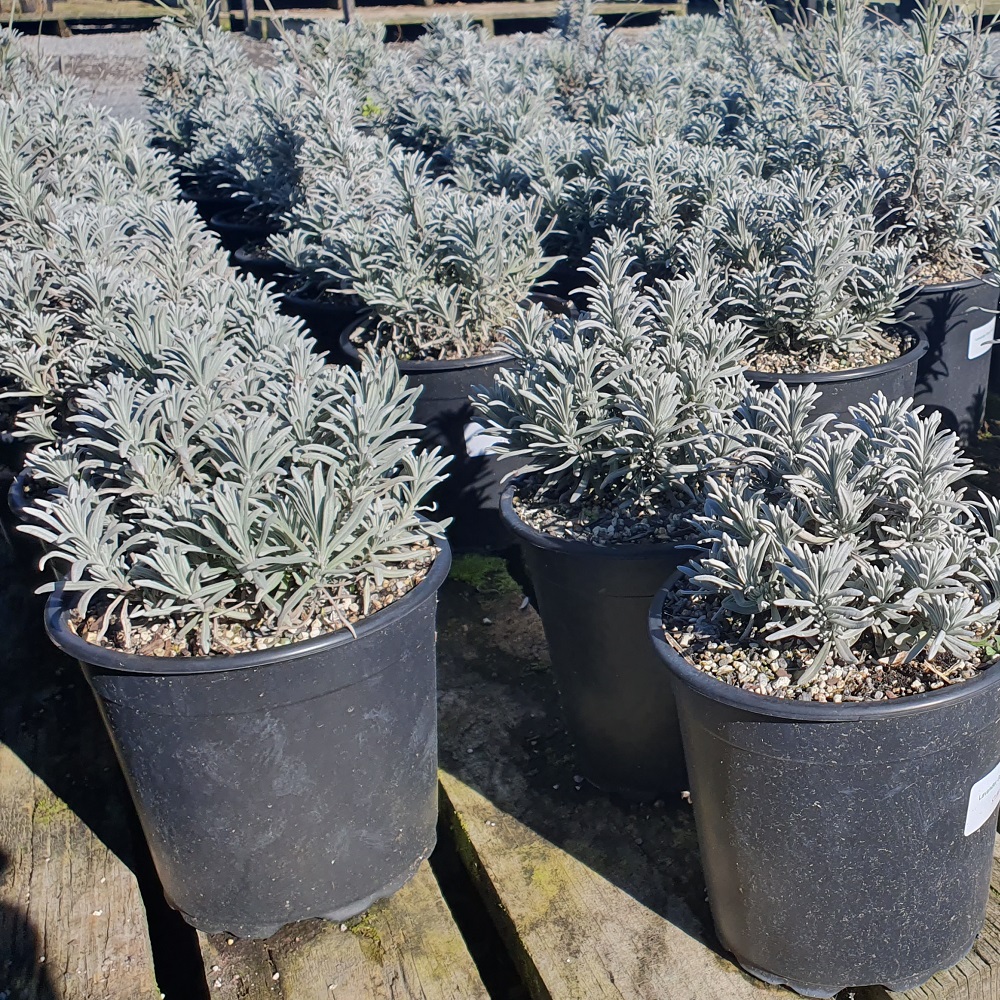
Lavender ‘Grey Lady’ is a compact, evergreen shrub known for its attractive grey-green foliage and fragrant, lavender-blue flowers. It’s a popular choice for gardens due to its aromatic qualities, compact size, and versatility in various garden styles. The plant typically reaches a height and spread of 60 to 75 centimeters.
The leaves are a distinctive grey-green color, providing a subtle backdrop for the flowers and a pleasant scent when brushed against.
Flowers:
‘Grey Lady’ produces abundant, soft, pale lavender flower spikes from late spring to mid-summer. These flowers are also aromatic, adding to the plant’s sensory appeal.
Uses:
It’s well-suited for borders, rock gardens, containers, and low hedges. Its compact size makes it ideal for smaller spaces and for creating neat edges along paths or garden beds.
Growing Conditions:
‘Grey Lady’ thrives in full sun and prefers well-drained, sandy or loamy soil. It’s a hardy plant that can tolerate dry conditions once established, but young plants may need protection from heavy frost.
Fragrance:
Both the foliage and flowers of ‘Grey Lady’ have a lovely fragrance, making it a great choice for sensory gardens or for use in potpourri and sachets.
Hardiness:
It’s a relatively hardy lavender variety, but young plants may need some protection from severe frost.
Mature Size:
Mature plants typically reach a height and spread of 60 to 75 centimeters.
Lavender ‘Grey Lady’ is a variety of English lavender (Lavandula angustifolia) known for its compact, bushy growth habit and fragrant, purple-blue flower spikes. It thrives in full sun and well-drained soil, making it suitable for borders, rock gardens, and containers. Proper care involves regular pruning to maintain shape and encourage flowering, as well as ensuring good drainage to prevent root rot.
Here’s a more detailed look at cultivating Lavender Grey Lady:
1. Planting:
Sunlight:
Lavender Grey Lady needs a location that receives at least 6-8 hours of direct sunlight per day.
Soil:
Well-drained soil is crucial. Amend heavy clay soils with sand or gravel to improve drainage. Lavender prefers slightly alkaline soil with a pH between 6.5 and 7.5.
Spacing:
Space plants 45 to 60 centimeters apart to allow for their mature size.
Planting:
Dig a hole that is at least 50-75% deeper and wider than the root ball. Incorporate compost or sheep pellets into the soil for added nutrients, but avoid placing fertilizer directly in the bottom of the hole.
2. Watering:
Lavender is drought-tolerant once established, but young plants need regular watering until they are established.
Water deeply but infrequently, allowing the soil to dry out between waterings.
Overwatering can lead to root rot, so avoid soggy conditions.
3. Fertilizing:
Lavender generally doesn’t require heavy fertilization.
If needed, apply a slow-release, balanced fertilizer in the spring or well-composted organic matter.
Avoid over-fertilizing, as it can lead to weak, leggy growth.
4. Pruning:
Prune Lavender Grey Lady after flowering to maintain its shape and encourage bushier growth.
A main annual cutback in late summer allows new growth to harden off before winter.
Remove spent flower spikes and trim back the plant by half to two-thirds to prevent it from becoming “woody” at the base.
5. Pest and Disease Control:
Lavender is generally pest and disease resistant.
Root rot is a common problem, so proper drainage is essential.
Spittlebugs can sometimes be found on lavender plants.
6. Harvesting:
Harvest lavender in the morning after the dew has evaporated but before the heat of the day.
This is when the essential oils are most concentrated, resulting in a stronger fragrance.