
Payless Plants

syn: Shrubby Tororaro, Wiggy-wig

Muehlenbeckia astonii

$8.00

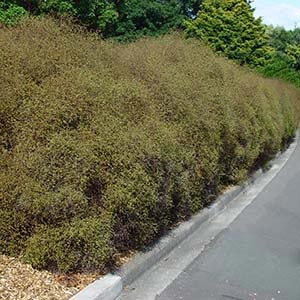
Muehlenbeckia astonii, commonly known as shrubby tororaro or wiggy-wig, is a distinctive, twiggy, semi-deciduous New Zealand native shrub known for its tangled, wiry branches and small, heart-shaped leaves. It is a versatile plant, suitable for hedging, borders, and exposed garden plantings. It is also known for its resilience, tolerating dry, windy, and coastal conditions.

Payless Plants
Physical Characteristics:
  • Size: Grows to a height of 1-2.5 meters, with a spread of up to 2 meters. 
  • Branches: Features a dense, interwoven network of reddish-brown to orange, flexible, zigzagging branches. 
  • Leaves: Possesses small, bright green, heart-shaped leaves that are deciduous in winter, adding to the plant’s unique appearance during that season. 
  • Flowers: Produces tiny, cream or lemon-colored flowers in the summer. 
  • Fruit: Follows the flowers with translucent white berries, which are enjoyed by birds and lizards. 
Habitat and Growing Conditions:
  • Native Range: Found in coastal areas of the South Island and eastern parts of the North Island. 
  • Sunlight: Thrives in full sun to partial shade. 
  • Soil: Prefers well-drained soil but can tolerate a range of conditions. 
  • Hardiness: Highly resilient, tolerating dry conditions, coastal environments, and moderate winds. 
Uses in the Garden:
  • Hedging: Forms an attractive informal or formal hedge when clipped. 
  • Mass Planting: Creates an interesting, undulating groundcover when mass planted. 
  • Coastal Gardens: Provides shelter for more delicate plants in coastal gardens. 
  • Specimen Planting: Its unique structure makes it a focal point in the garden. 
Conservation Status:
  • Muehlenbeckia astonii is considered “Nationally Endangered” in the wild due to habitat loss and threats from introduced species.
  • Conservation efforts are underway to propagate and restore wild populations and promote its use in restoration plantings and gardens. 

Last Updated on September 23, 2025 by admin

Loading

Cultivation Guide

Muehlenbeckia astonii, commonly known as Shrubby Tororaro, is a hardy, native New Zealand shrub that can be cultivated in various conditions. It thrives in full sun to partial shade, prefers well-drained soil, and tolerates drought, wind, and coastal environments. 

Growing Conditions:
  • Sunlight: Full sun to partial shade.
  • Soil: Well-drained soil is preferred, but it can tolerate some moisture.
  • Climate: Tolerates drought, wind, and coastal conditions.
  • Hardiness: It’s a hardy plant that can withstand various conditions. 
Planting and Care:
  • Planting Time: Best planted after autumn rains when the soil is moist and warm, allowing the plant to establish its roots before summer. 
  • Planting: Dig a hole twice the size of the root ball, mix in organic matter, and backfill with the amended soil. 
  • Watering: Water deeply when planting and mulch to retain moisture. Once established, it is drought-tolerant but benefits from occasional deep watering during extended dry periods. 
  • Fertilizing: Fertilize with Kings 24+ or use organic options like Aquaticus Garden Booster. 
  • Pruning: Muehlenbeckia generally doesn’t require regular pruning, but it can be pruned to maintain its shape or size.
  • Soil Improvement: In heavier clay soils, add Gypsum to improve drainage and structure. 
Uses:
  • Hedges: Can be used as a low hedge.
  • Groundcover: Mass planted, it can form an undulating groundcover.
  • Windbreak: Can act as a low windbreak to protect delicate plants.
  • Containers: Can be grown in containers.

Last Updated on September 23, 2025 by admin
Loading

Unit

2.5 Litre HP

Grade

200-500mm

Annual Production

200

Supplier

Payless Plants

Comment

Available stock can vary, all the way down to none available, depending on sales demand and where we are in the production cycle.

Shopping Cart
Scroll to Top