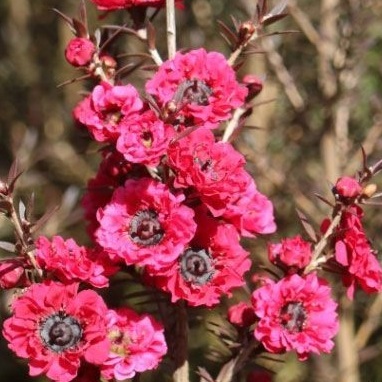
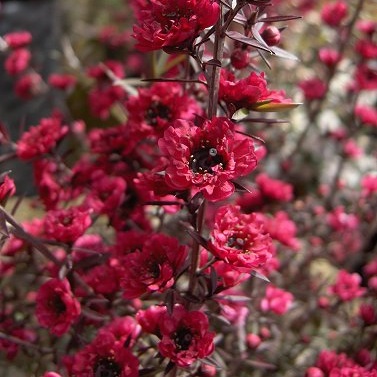
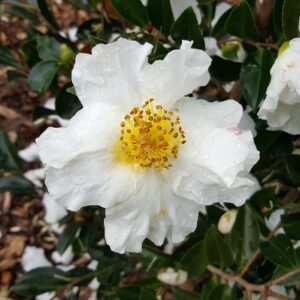
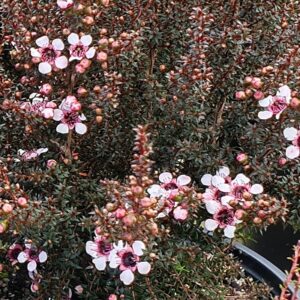
Leptospermum Burgundy Queen, also known as Manuka or Tea Tree, is a native New Zealand evergreen shrub prized for its attractive, dark reddish-bronze foliage and masses of double, deep burgundy-red flowers that bloom in late winter and spring. It’s a hardy and relatively low-maintenance plant, making it suitable for various garden settings, including coastal areas and for hedging or screening.
The shrub features narrow, red-bronze leaves, which provide year-round visual interest, especially when tinged with burgundy during colder temperatures.
Flowers:
Leptospermum Burgundy Queen is renowned for its stunning double, deep burgundy-red flowers that appear in late winter and spring. These blooms add a striking splash of color to the garden during a time when many other plants are dormant.
Size and Shape:
It typically grows to a height of around 2 meters and a width of 1.5 meters, forming a compact, bushy shape.
Hardiness and Maintenance:
The plant is hardy and tolerates a range of conditions, including full sun, dry conditions once established, coastal conditions, and frost. After flowering, it benefits from a light trim to encourage a tidy shape and promote healthy new growth.
Uses:
Leptospermum Burgundy Queen is versatile and can be used as a specimen plant, in hedges, for screening, or in coastal gardens. It also attracts bees, making it a valuable addition to any garden.
Origin:
It is a cultivar of the New Zealand native Leptospermum scoparium.
Additional Notes:
While it prefers full sun, it can tolerate some shade, and it’s generally a low-maintenance plant that is easy to grow and maintain.
Leptospermum Burgundy Queen, also known as Manuka, is a hardy, evergreen shrub that thrives in full sun and well-drained soil. It’s relatively low-maintenance, tolerating drought and light frost, and is ideal for hedging, screening, or as a focal point in the garden. Pruning after flowering helps maintain its shape and encourages new growth.
Cultivation Details:
Sunlight: Full sun is best for optimal flowering and growth, though it can tolerate partial shade.
Soil: Well-drained soil is crucial, and it can tolerate a range of soil types, including those that are clay-based, sandy, or loamy.
Watering: Water deeply after planting and apply mulch to help retain moisture. Once established, it is quite drought-tolerant.
Pruning: Prune lightly after flowering to maintain shape and encourage new growth.
Hardiness: It is hardy to frost and can tolerate coastal conditions.
Pests and Diseases: Generally pest and disease-free.
Uses: Excellent for hedging, screening, and as a winter focal point in the garden.
Specific Considerations for Pirongia:
Given Pirongia’s climate and soil conditions (likely well-drained with occasional frost), Leptospermum Burgundy Queen should thrive. Ensure the plant is well-established before winter to help it withstand any potential frost. Mulching will help protect the roots from temperature fluctuations.