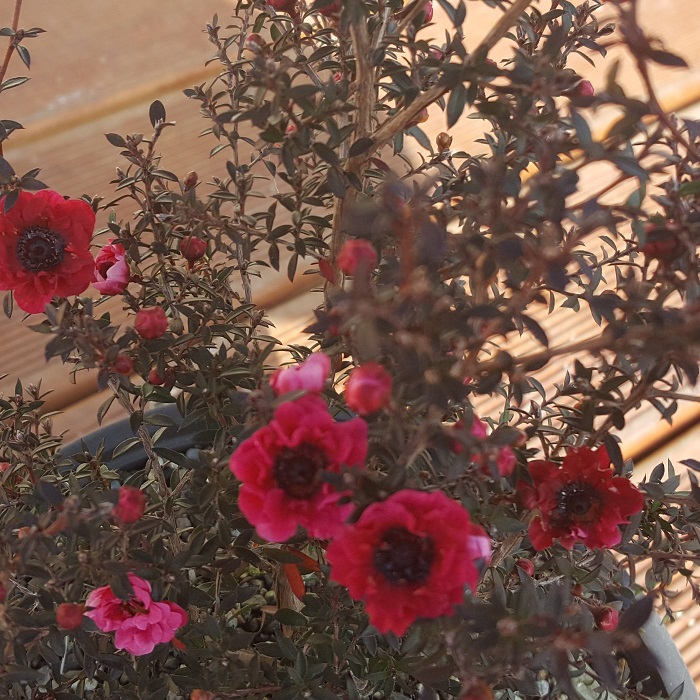
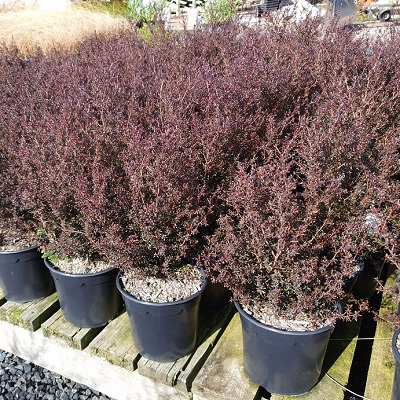
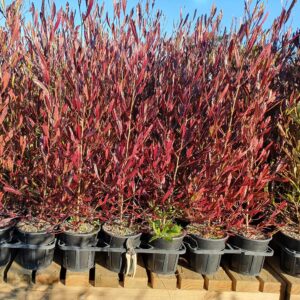
Leptospermum Wiri Kerry, also known as Manuka, is a compact, evergreen shrub with double red flowers and bronze foliage. It’s a hardy plant that can grow up to 70 cm high and 50 cm wide. It blooms from March to October and is often used as a hedge or to attract wildlife.
Leptospermum ‘Wiri Kerry’, a cultivar of the Manuka tree, is cultivated for its attractive reddish-bronze foliage and double red flowers. It thrives in full sun, well-drained soil, and tolerates frost. Light pruning after flowering helps maintain its compact size (70cm x 50cm).
Here’s a more detailed look at cultivating ‘Wiri Kerry’:
Planting and Location:
Sunlight: ‘Wiri Kerry’ prefers full sun, ideally 6-8 hours daily, but can tolerate partial shade.
Soil: It thrives in well-drained soil, with a pH of 6.0-7.0 being ideal.
Planting Time: Spring or early fall are good times to plant.
Spacing: Allow 3-5 feet between plants for healthy growth.
Care:
Watering: Deep watering is important after planting to establish roots. Once established, allow the soil to dry out between waterings to prevent waterlogging.
Fertilizing: Lightly feed with a balanced fertilizer in spring.
Pruning: Prune lightly after flowering to encourage a bushy habit and maintain shape.
Other Considerations:
Hardiness: ‘Wiri Kerry’ is frost-tolerant once established and tolerates coastal conditions.
Drought Tolerance: Once established, it is drought-tolerant.
Pests and Diseases: While generally healthy, monitor for pests and diseases, particularly sooty mold, which can be treated with a copper fungicide.